Why dwell upon the solutions to avoid the effects of weathering and the need to adapt when they will forever be inevitable?
Full deterioration is going to occur, so why not condense the time to force leftover traces more rapidly but resist a hasty ruination?
How can architecture still define space for inhabitation, and simultaneously embrace environmental processes?
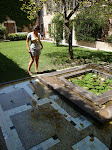
an olive green catches your eye, pulling it to the ground
it has made a surprisingly exact line weaving through the cobblestone mortar
leading you on a journey from the tufa stone wall to the drainage slope
the vegetation left behind from a stream’s repetitive path
does it rain here often?
All materials are impressionable. They preserve phenomena that has occurred over time. These phenomena are environmental elements and humans. However, water is the largest contributor to weathering; staining, decay, and horizontal datum lines left by floods and canal tides. A material’s ability to directly respond to its environment makes spaces that are alive and trodden. It is the discovery of prior occurrences that create intrigue and desire for interaction.
Weathered surfaces make the experience and intention of a space, defining it through an orientation and layering of materials. Different levels of porosity and repetition determine the preserving of more or less evidence on a material. Existing surfaces that already contain traces are incorporated with present and future surfaces to provide the understanding and education of the effects of water. Like the time sensitive effects of water, a place of temporal rest and experiential understanding is created in the exterior environment.
at the very end of my trip, i had the chance to tour the inside of a shotgun that my friend, Frances, whom I have been staying with, is going to move into. This shotgun was further downtown, out of Mid City, around the Lower Garden District. It is also half a shotgun; the landlord leases out each half separately down the length of the house. It was not nearly as narrow as I had imagined. I would say approximately 10' wide, but did not feel like it. It was adorable! More than enough room for one person.
Upon entrance there was a small living room, then opened into a dining area and then kitchen. Through the kitchen was a bathroom and then the bedroom, and past the bedroom was another small living room. The best part, out back, was a small yard, no grass, but a mini pool for those scorching days. How lovely. It was completely enclosed by fences and a green growing back wall, providing safety and privacy. So quaint and breathable, yet modest and New Orleanian traditional. The ceilings were certainly tall, maintaining the primary purpose of maximum ventilation; along with full ceiling to floor windows and doors which all opened with layers of screens and shutters. Each room also had a dark wooden framed fireplace. They are nonfunctional, but still. The appearance added such dimension and clear tradition to the experience of the room.
I have just returned from my trip. It was quite amazing, incredible; the architecture, the tangible culture, the pleasant, beautiful climate, and the constant visibility and, if not visibility, then the presence of water.
Water was everywhere. New Orleans could almost be an island. Lake Pontchartrain to the north, the Mississippi to the south, the canal cutting the city almost in half, and endless bayous and small streams and lakes everywhere you turn. Bayou St. John was my first look at a bayou of any kind. Calming, cool, much breezier than the neighborhoods just across the street, eliminating the beating of the sun on my shoulders. Expecting to be consumed by humidity, I was pleasantly surprised to hardly experience any. From speaking with locals, we came at a prime time because the humidity has not set in yet. In addition, we stayed at a friend's house about 2 blocks from Bayou St. John, so we constantly felt the cooling breeze.The first exploration around Mid City, where I stayed and conveniently focused my explorations around, brought the discovery of the flooding that occurred in the area during Katrina. I had not expected it to have been hit so badly. The flood lines were about six and a half feet high! There's a beloved tavern on the bayou, Parkway. It's known for its mean roast beef and gravy poboy (submarines). The bartender talked to us about how they saved the restaurant, and showed us a photo of the place more than halfway submerged after Katrina.
The bayou ends a couple blocks away from our entrance upon it. It just ends. I found that kind of odd. It appears to want to continue if it was allowed. Just after the ending, an asphalt paved street runs perpendicular on only about a 3' high levee-type mound. Beyond the street is a small median of grass that sinks in the center, soggy and heavy with water; that is my evidence of the desire of the water to continue.
Another street perpendicular, without houses so in visible distance from the end of the bayou, lies a strange subterranean canal-type thing. From the ground horizon, all that is seen is a line of concrete. It could almost be a foundation, but the concrete continues as far as the eye can see. When looking down inside, a good 10' drop inside, and it was full of water, but only about 2' deep at the bottom. This condition occurred the entire way. We followed it to see if we could decipher its purpose. It certainly ran alongside an uncomfortable neighborhood, or let's say grouping of shotguns. At the end, we discovered what appeared to be a pumping station. That's my best guess. It ended, on a small incline, instead of the normal flat plane that occurred the rest of the length. Then back up on the surface, there was a small structure, like a house, and across the street was the station. It certainly related to the water because there were enormous 5' diameter pipes connecting the building to the ground.
above are water lines, exterior and interior. Both are remnants of Katrina.then there are the levees. Do you wonder why they failed? Natural levees are obviously made by natural means, the river deposits sediments over timethrough various floodings. These create high river banks called levees, which mean "raised up".They become as high as 15' in some areas, and 8' in others. For instance, when the river runs straight, levees tend to be more narrow and not as high, but in the more meandering sections, levees tend to be faster and have even eroded away entire sections of streets in addition to their own natural levees.
Above you see the man made flood walls, some are this size, some are much taller. In comparison to other countries... on the Thames in London in Japan Maeslant Storm Surge Barrier in the Netherlands, one of the largest moving structures on Earth Eastern Scheldt Storm Surge Barrier in Holland The Hagestein Weir in the Netherlands
So I leave in two days. Friday morning. With the decision made final about a month ago to travel to New Orleans to do site research and experience the city, it became clear that I needed to make a bold statement about the direction of my project. The most recent crit also told me this. In order to narrow down my concepts, because up to this point my project has been described as a "patchwork of mini projects", I gave in to declaring a much more specific topic within weathering. Water. Weathering by water. This does incorporate the sun/temperature as well, but looking back I have been looking at the effects of water specifically on materials, but never wanted to come out and state I was only working with water. Choosing the site in New Orleans makes it perfectly clear that sticking to water is a good direction. Water lines, flood lines, which in turn talk about datum lines and the ability to trace these types of environmental occurances is what interests me. Of course this introduces my research to the levee systems employed in the city and how they work to keep water out, or not. There are natural levees, which the city was originally built upon, and then there are artificial, or man made, levees. Floods walls and revetments accompany these man made levees. Floods walls rise at least 15' to 25' higher than the natural levees.
The images above, the nearest on in particular, are images found online of transverse sections through the city, from Lake Pontchartrain to the Mississippi River. The nearest was the first I came across and it seemed out of scale and inaccurate, almost unbelieveable. After continuing some research on similar sections, I found that it does not seem so inaccurate. The others posted look very similar. I hope to attempt to compile my own transverse section while I'm there.
this blog began as documentation for my architecture degree project at RISD. it's now a similar documentation tool for things i enjoy and find interesting. threads from my project are carried through; beauty of weathering and the elements, handmade things: bookbinding, all things fun and original.


 at the very end of my trip, i had the chance to tour the inside of a shotgun that my friend, Frances, whom I have been staying with, is going to move into. This shotgun was further downtown, out of Mid City, around the Lower Garden District. It is also half a shotgun; the landlord leases out each half separately down the length of the house. It was not nearly as narrow as I had imagined. I would say approximately 10' wide, but did not feel like it. It was adorable! More than enough room for one person.
 The first exploration around Mid City, where I stayed and conveniently focused my explorations around, brought the discovery of the flooding that occurred in the area during Katrina. I had not expected it to have been hit so badly. The flood lines were about six and a half feet high! There's a beloved tavern on the bayou, Parkway. It's known for its mean roast beef and gravy poboy (submarines). The bartender talked to us about how they saved the restaurant, and showed us a photo of the place more than halfway submerged after Katrina.


 above are water lines, exterior and interior. Both are remnants of Katrina. then there are the levees. Do you wonder why they failed?


 So I leave in two days. Friday morning. With the decision made final about a month ago to travel to New Orleans to do site research and experience the city, it became clear that I needed to make a bold statement about the direction of my project. The most recent crit also told me this. In order to narrow down my concepts, because up to this point my project has been described as a "patchwork of mini projects", I gave in to declaring a much more specific topic within weathering. Water. Weathering by water. This does incorporate the sun/temperature as well, but looking back I have been looking at the effects of water specifically on materials, but never wanted to come out and state I was only working with water. Choosing the site in New Orleans makes it perfectly clear that sticking to water is a good direction. Water lines, flood lines, which in turn talk about datum lines and the ability to trace these types of environmental occurances is what interests me. Of course this introduces my research to the levee systems employed in the city and how they work to keep water out, or not. There are natural levees, which the city was originally built upon, and then there are artificial, or man made, levees. Floods walls and revetments accompany these man made levees. Floods walls rise at least 15' to 25' higher than the natural levees.